Customer complains water or ice cubes from the refrigerator dispenser have a bad taste.
Most of the time when we hear these complaints we ask the tech if the water tastes bad / strange to them and they usually step outside and say they cannot taste a problem. It could be that the customers previous unit had a filter that filtered out different things than LG. So it may not be that the water tastes bad but that it tastes different than before and the customer is just picking up on the difference. The filter will change the taste of the water and some customers may prefer the taste without a filter installed at all so they could try it without a filter and see if that appeases them.
Check the water supply tubing that the customer has connected to the back of the refrigerator. It should be PEX or Copper tubing.
Braided Plastic or Braided Nylon tubing can impart a chemical or rubber taste. In ice the chemical taste is really apparent
Plastic non-food grade tubing can impart a plastic or mint taste. Most people say the ice tastes like mint.
Braided Stainless tubing generally makes the water taste like plastic or rubber because the internal lining of the tubing is rubber. People describe the ice as having a metallic taste.
Copper tubing makes the water taste like it has a greasy or oily taste and if the copper is new it can even give off a metallic taste in both water and ice, also note: if the copper line is old it will give off a metallic taste because copper degrades over time especially with hard water. New copper lines may need to be flushed with 5 or 10 gallons of water before they are hooked to the refrigerator to ensure they don’t effect the taste of water or ice because of the process involved in manufacturing them.
If the water tastes fine but the ice does not, this is the result of minerals or water softeners in the water. Minerals or water softeners do not have taste in a liquid state, but when frozen the chemical properties of the minerals or water softeners change. This is why ice can taste different than the water. This is not the result of the unit, but the minerals in the water or softeners added to the water.
STEP 1 Remove odor
Odors in the refrigerator’s freezer or fresh food compartment may not be apparent but will still affect the smell and taste of the water and ice.
- Clean the interior of the unit regularly.
- Always seal food containers tightly.
- Place boxes of BAKING SODA in both compartments for odor absorption.
Do NOT use open containers of baking soda, which can allow the baking soda to be stirred up and circulated in the air. If baking soda circulates with the air flow it may settle in the ice tray and affect the taste of the ice.
STEP 2 Check tap water
If the ice and tap water (from the sink) have a similar taste, then the issue is not with the refrigerator.
STEP 3 Recently replaced the water lines?
If you recently replaced your water line, it may transfer an unfamiliar odor or taste to the water or ice.
Different types of water lines can impart different odors and tastes,
such as plastic, rubber, greasy, mint, or even chemical.
- Try dispensing 2 gallons of water to flush the line, then taste the water again.
- If the taste persist, pull the refrigerator out, turn OFF the water supply, and disconnect the water supply line from the refrigerator.
- Once disconnected, turn the water supply ON and check the taste of water from the line.
- If the water tastes good, reconnect the unit and proceed to next step below. However, if the taste is present directly from the water supply line, then that could be the cause.
STEP 4 Replace filter every six months
It is recommended that the water filter be replaced every six months or more often as needed. This can vary from household to household, depending on the frequency of use, water quality, and style of filter. If the water filter has not been replaced in the last 4-6 months, the water or ice may develop an unpleasant taste or odor.
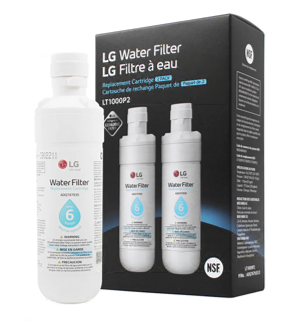
Replace using only LG Brand filters that are not expired.
Avoid using Non-LG Brand Water filters and using a water filter for more than recommended period (6 months)
Use of consumable products that are NOT Authorized by LG is not covered under Warranty.
LG recommends replacing the water filter every six months.
If you have been using the filter for more than 6 months,
issues caused by this are not covered under Warranty
CLICK A VIDEO LINK BELOW TO WATCH