Standard Icemaker Not Enough Ice
Customer Expectation: Standard Icemakers will harvest every 60-80 minutes, door openings, defrost, etc. can change the cycle time. They typically produce a minimum of 100-120 Cubes per day. It is possible that customers could consume more ice in a day than the unit can produce depending on family size and usage.
If there is a defect, Not Enough Ice is typically caused by a temperature related issue. If the unit is installed in an area with higher than normal temperatures, ice production could be affected. For example, a garage that is not temperature controlled.
If you are sure the issue is Unit related and not an installation/environment issue continue below…
1) Temperature in the Ice room.
–The first thing you should always verify if a unit is not producing any ice or LOW ice is the temperature at the icemaker.
-While water freezes at 32°F the LG Icemakers require a much colder temperature to operate and harvest. For an LG Icemaker to harvest the temperature will need to be below 15°F.
-If the icemaker that is having issues is in the freezer section, then the first check to make would be verifying the temperature in the freezer section. If the icemaker is in the left refrigerator door, then you would want to verify the temperature in your ice room area. The best method to read the temperature is with a thermocouple.
-If the temperatures are warmer in these areas when tested, then you would want to check for cooling or airflow issues instead of an icemaker failure.
2) Verify Temp Sensor is OK.
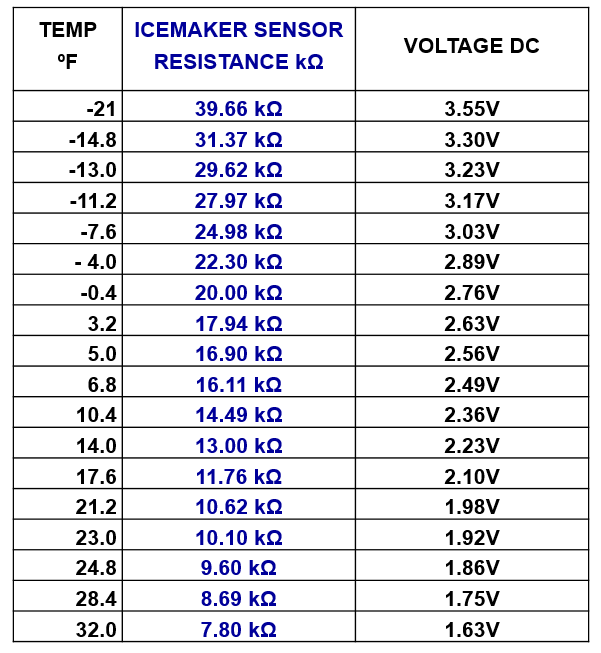
-If the temperatures are reading correctly (below 15°F) and there are cubes in the tray, then you need to check your ice maker sensors to make sure they are reading correctly.
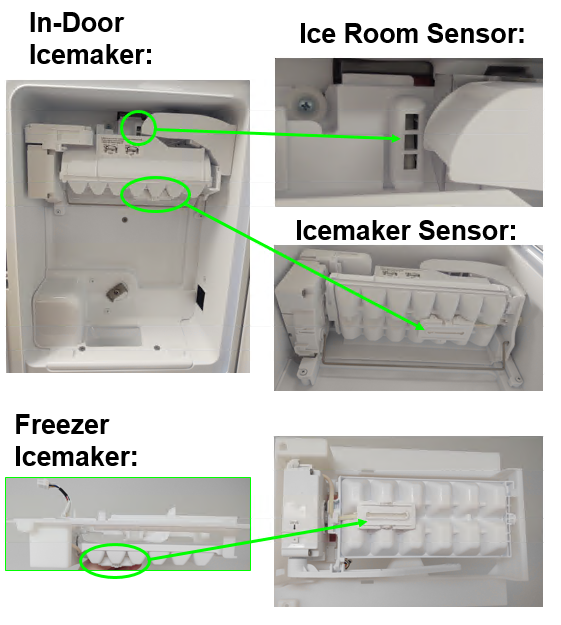
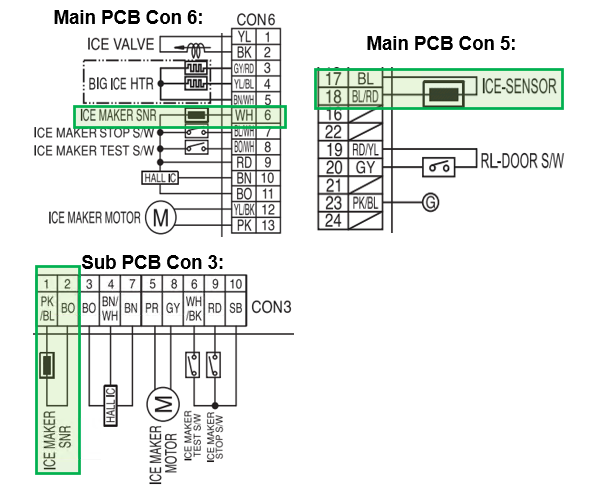
-These Icemaker sensors can be labeled differently from model to model, but the key will be the word “Ice” when looking for the sensors on the wiring diagram. The sensors can be located on the Main, Display, or Sub PCB depending on model. Examples below from model LRFVS3006:
Below are some examples of the locations of the sensors…